

Fireplace Inspiration
Fireplace Inspiration
Old Fireplaces, New Flames: How Our Customers Did It
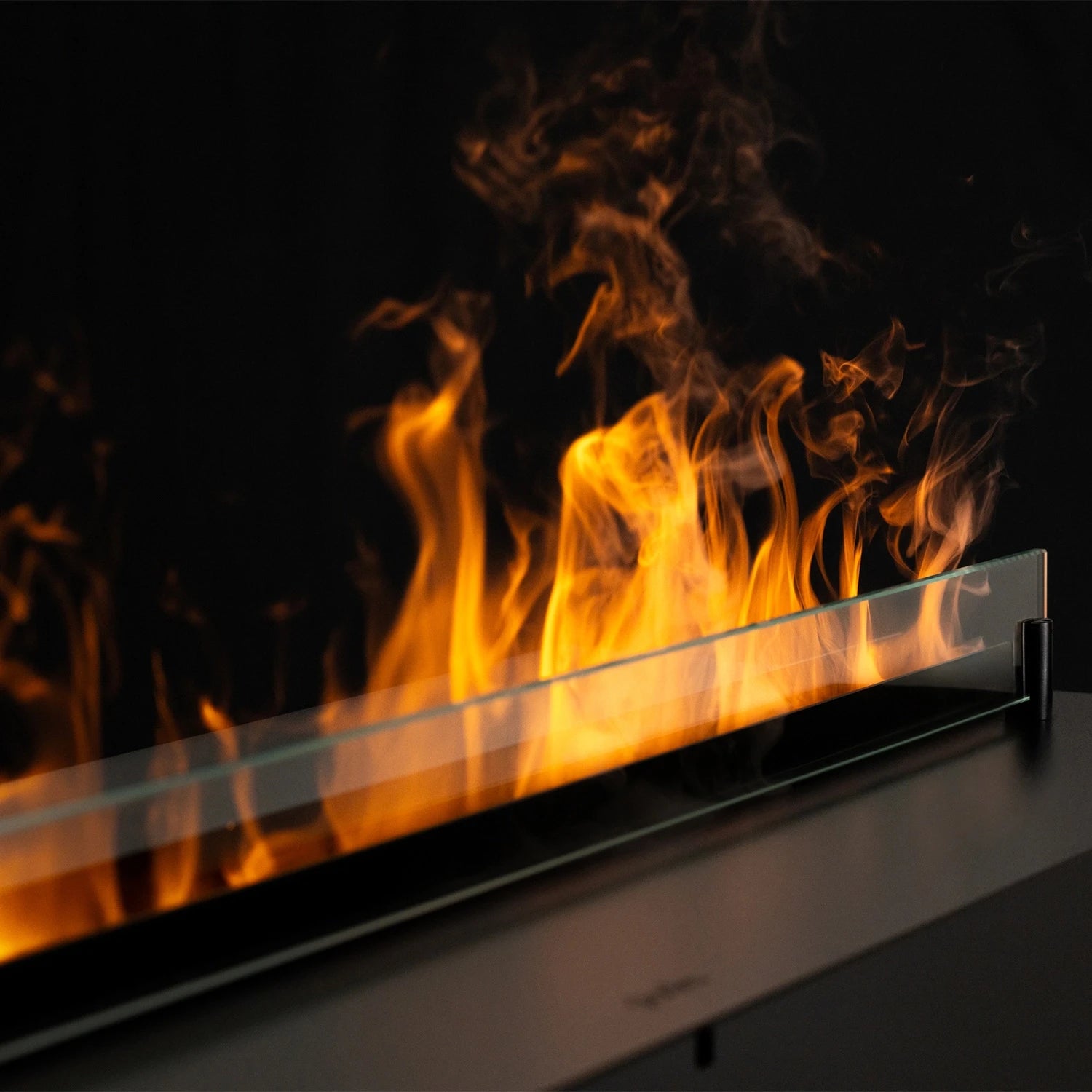
Every week we hear from people with a fireplace they love but no longer light. A cast-iron Victorian surround, a small Edwardian fireplace in a bedroom, a wood burner that has turned into a piece of furniture. Here are some of the homes where our customers gave those fireplaces real flames again with bioethanol, what they chose, and what they learned along the way. Find your fireplace A Victorian or Edwardian fireplace with a fire basket A wider open hearth An old log burner A larger fireplace with an unused chimney Putting the flame out What our customers would tell you A Victorian or an Edwardian fireplace that kept its fire basket “I have a Victorian fireplace and fire basket, will I be able to use this bioethanol insert in it?” It is one of the questions we get most often from customers, and the answer is yes. The customer kept the original cast-iron fire basket and placed a slim ScandiFlames manual burner inside it, where the coals used to sit. A handful of decorative logs around the burner hides the steel burner, so from the sofa it simply looks like a fire burning in the basket. The idea that makes this work: the burner stands inside the basket when there is room for it, and the original fireplace stays exactly as it was. Burners that usually work in a Victorian fire basket Photo Product W × D × H (cm) Good to know ScandiFlames Deluxe Bio Burner 1.0 L 28.5 × 10.5 × 6.5 Our pickOur first choice for Victorian and Edwardian fireplaces. Only 10.5 cm deep, so it fits even a shallow basket. ScandiFlames 1 Litre Deluxe Burner 24 cm 24 × 15.5 × 6 Compact and low ScandiFlames 1.3 Litre Premium Burner 24 cm 24 × 15.5 × 7 Same footprint, slightly taller ScandiFlames 1.5 Litre Premium Burner 26 × 15.5 × 7.4 For a slightly wider basket Our customer Georgina Raine did the same with her Victorian fireplace. She placed a bioethanol burner in the fireplace, filled it and lit it, and filmed the whole thing. A wider open hearth Not every old fireplace is small. In a wider brick or stone opening, a freestanding ScandiFlames fire grate fills the space and comes with its own logs, so it looks like a laid fire the moment it is in place. Fire grates and inserts that usually work on an open hearth Photo Product W × D × H (cm) Good to know ScandiFlames Fire Grate M (40 cm) 44 × 35 × 13.9 Comes with logs ScandiFlames Fire Grate L (60 cm) 61 × 35 × 20 Comes with ceramic logs ScandiFlames Kingston fire grate 46 × 32 × 29 Freestanding grate Bioethanol Fireplace Insert Package 50 cm 50 × 20 × 10 Package with logs, glow fibres and 12 L bioethanol The log burner that became a frame for the flames Many of our customers keep their old wood burner because they like how it looks, even if they are done with carrying wood and cleaning the glass. This customer placed a burner inside the stove and dressed it with ceramic logs. Bioethanol needs oxygen, so the door question came up straight away. With the chimney open, the door on the log burner can be closed. If the chimney has been blocked, the door comes off or stays open while the flame burns. Burners that usually fit through a stove door Photo Product W × D × H (cm) Good to know ScandiFlames Bioethanol Fireplace Insert 30.5 cm 30.5 × 20 × 10.3 For smaller stoves ScandiFlames Bioethanol Burner Insert 37 cm 37 × 19.5 × 10 For medium stoves ScandiFlames 1.5 Litre Premium Burner 26 × 15.5 × 7.4 Low, fits a narrow door Bio Ethanol Fire Basket with Curved Steel Front 44.5 × 20 × 15 Curved steel front hides the burner Measure twice Measure the door opening as well as the inside of the stove before you choose. The burner has to fit through the door, not just inside the stove. A chimney that is no longer in use “I have a chimney I don’t use. Is it possible to make a flue so particles are led out through it?” The customer’s thought was natural: there is a chimney, so why not use it? A bioethanol burner does not need a chimney or a flue, which is exactly why it works in fireplaces where the chimney is closed off or no longer used. The fireplace simply becomes the setting for the flame. Burners that usually work in a larger fireplace with an unused chimney Photo Product W × D × H (cm) Good to know ScandiFlames Superior 2.5 L Burner Insert 45 cm 45 × 16 × 8 2.5 L, black ScandiFlames Superior 3.5 L Burner Insert 60 cm 60 × 16 × 8 3.5 L, black ScandiFlames Fire Grate XL (80 cm) 76 × 35 × 13.9 Comes with logs ScandiFlames Superior 4 L Burner Insert 80 cm 80 × 16 × 8 4 L, black, for the widest openings Putting the flame out One customer wrote that the flames kept finding their way along the sides even though the plate was closed. This happens when the burner has been overfilled or fuel has been spilled: the excess bioethanol sits on the burner’s top surface or around the opening, outside the area the lid covers, so it keeps burning after the lid is closed. To avoid it, fill only to the marked maximum level and wipe up any spilled fuel before you light the burner. Every burner comes with a tool for the lid: slide the lid all the way over the opening in one movement, and the flame is smothered. Make sure no decoration is in the way so the lid can close fully. The extinguishing guide shows it in a short video. What our customers would tell you Small period fireplace? Choose a manual burner rather than a fire grate, and dress it with decoration. Keep 100 cm free above the burner to anything that is not fireproof, such as a wooden mantel shelf. The fireplace itself is already fireproof. Check the fit before the first fill. A burner that has had bioethanol in it cannot be returned. See our return policy. Before you choose: what to measure Width, depth and height of the opening or fire basket For a log burner: the door opening as well as the inside The distance from the burner up to the mantel shelf (100 cm to anything that is not fireproof) Ready to do the same at home? Our step-by-step conversion guide takes you through it, and room size and burner size helps you choose. Want us to suggest a burner for your fireplace? Send us a photo and the measurements of your opening, or visit our showrooms. Ask an expert
Read more
Bioethanol fire or electric fire?
Choosing between a bioethanol fireplace and an electric fireplace can be difficult, as there are pros and cons to both. This guide aims to provide a clear overview of each option to help you make the right choice for your home. Electric Fireplace Electric fires have gained increasing interest in recent years, mainly due to how easy they are to install and maintain. They are also a cost-efficient way of heating a room. However, they do not have the same heating capabilities as a traditional fireplace — and crucially, they do not produce a real flame. Pros of an Electric Fire No dangerous fumes Does not emit soot or ash Does not require a chimney Easy and quick to start Good heating effect No fire risk Cons of an Electric Fire Requires an electricity connection Does not produce real flames Lower durability than other fireplaces Often more expensive to run The biggest drawback of an electric fire is the lack of a real flame. Many people associate a fireplace with a living, flickering flame — and whilst some newer, high-end electric fires attempt a realistic flame effect, it will never replicate the relaxing atmosphere of a real flame. Bioethanol Fireplace Many people are still discovering the possibilities of a bioethanol fireplace. Unlike electric fires, a bioethanol fireplace produces an authentic living flame by combusting organic fuel — without emitting any dangerous fumes, soot, or ash. Pros of a Bioethanol Fireplace Authentic living flame Does not require a chimney Burns on organic, eco-friendly fuel Does not emit soot, ash, or dangerous fumes Only requires bioethanol to ignite Can serve as a secondary heat source Very portable and mobile Suitable for small rooms and flats — requires little to no ventilation Cons of a Bioethanol Fireplace Requires refilling from time to time Ongoing fuel costs can be higher than running an electric fire Always produces heat when burning — cannot be used purely for decoration in warm weather The biggest advantage of a bioethanol fireplace is the authentic living flame — something neither an electric fire nor a gas fire can truly replicate. The real flame is what most people associate with having a fireplace, and bioethanol delivers exactly that. Conclusion Electric and bioethanol fireplaces share a number of advantages — both are easy to install, require no chimney, and produce no ash or soot. However, the key difference lies in the ambiance and warmth that only an authentic living flame can provide. Bioethanol fireplaces also offer exceptional portability. Freestanding and tabletop models can be moved wherever you need them — whether that's outside on a warm evening or in the living room on a quiet Sunday afternoon. The possibilities are endless. Whilst both types of fireplace have their merits, only a bioethanol fireplace can give you the real, living flame that truly makes a fireplace feel like a fireplace.
Read more
Can a bio fireplace be used as a supplementary heat source?
Rising energy prices got you looking for alternatives? A bioethanol fireplace makes an excellent supplementary heat source — eco-friendly, easy to use, and perfect for taking the edge off a cool evening without turning on the full central heating system.
Read more


